Sustainability data

Sungrow sustainability planning built around measurable renewable asset performance

Sustainability language in renewable energy must be specific. Sungrow's project conversation should avoid absolute claims such as zero carbon from day one and instead focus on measurable generation, storage efficiency, grid support, product durability, recycling readiness, service practices, and documented operating data. For buyers, the most useful sustainability evidence is the information that remains visible after commissioning: production curves, performance ratio trends, battery state of charge, alarm history, avoided curtailment, and maintenance records. Those data points help asset owners communicate impact without overstating what a project can prove.

Dashboard view

Metrics that connect environmental goals with operating reality

PRPerformance ratio

Track PV output against irradiance and system availability rather than relying on nameplate capacity.

SOCBattery state of charge

Review charge and discharge patterns, reserve settings, and dispatch efficiency for LFP storage assets.

O&MService response evidence

Use alarm history, remote diagnosis, and firmware records to show that renewable assets are being maintained.

LCALifecycle context

Discuss materials, warranty period, end-of-life planning, and regional compliance without making unsupported claims.
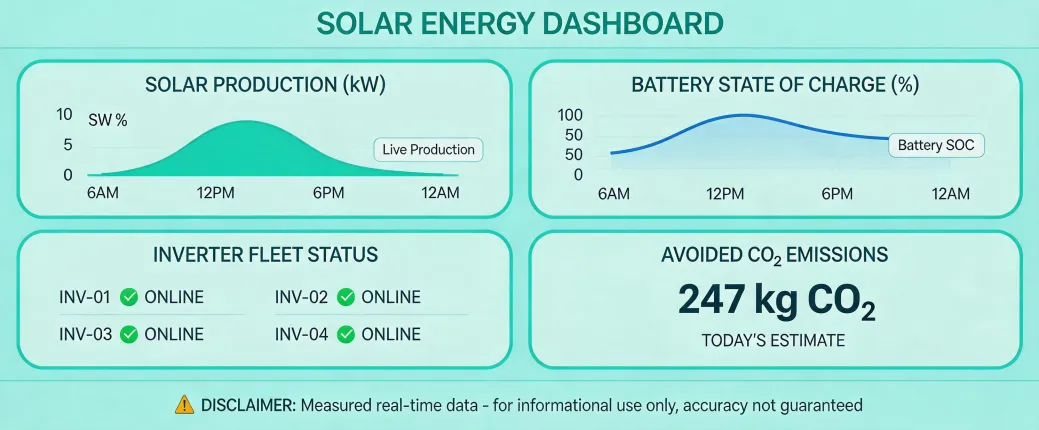
Renewable energy sustainability dashboard
Documents

Research and compliance materials buyers usually request

A credible sustainability package should support engineering, finance, and community review. Sungrow-related project files can include product datasheets, grid-code certificates, battery safety summaries, monitoring data definitions, warranty terms, installation manuals, and O&M procedures. When a buyer compares projects across regions, documentation should distinguish North American UL and IEEE expectations from European CE or IEC references and Australian grid rules. This prevents sustainability claims from drifting away from local compliance realities.

Timeline

How sustainability evidence matures through the project lifecycle

Design

Set yield assumptions, compliance region, inverter topology, battery use case, and monitoring data requirements.

Procure

Confirm certificates, datasheets, warranty boundaries, spare strategy, and regional installation rules.

Commission

Record grid settings, firmware versions, test results, communication mapping, and safety labels.

Operate

Track alarms, performance ratio, SOC behavior, service actions, and evidence for stakeholder reporting.

Build a sustainability file that operators can defend

Request Documentation Support